
I Found Out in America — On Not Knowing You’re Poor
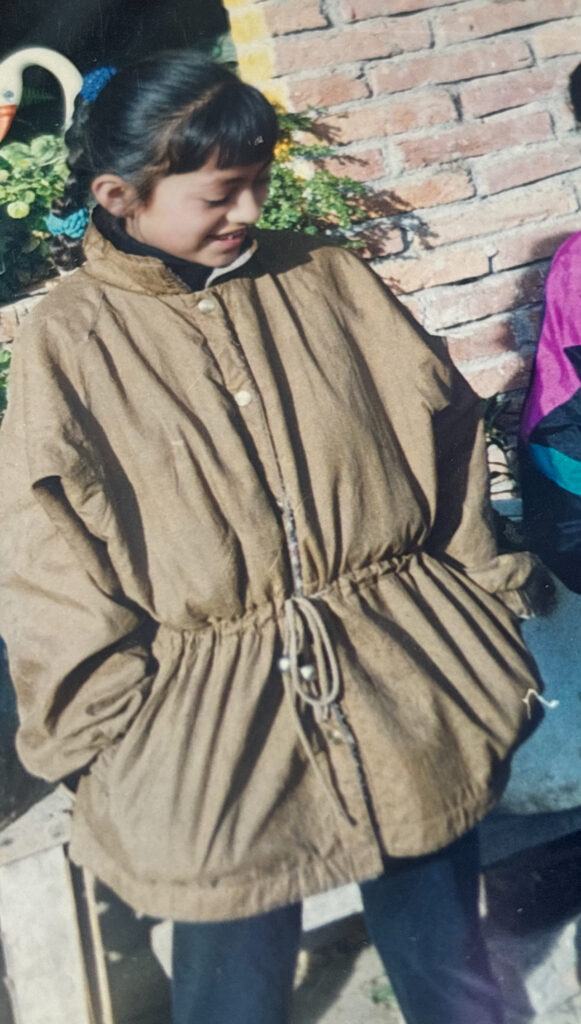
In Mexico I did not know we were poor.
This isn’t a sweet story about innocence.
We had a leaky roof and we set buckets when it thundered. There was no running water. If you wanted to bathe, you filled a boiler outside the shower with wood, lit it, and waited about thirty minutes for the fire to hold. There was a television above the refrigerator with two channels, and I was the remote control — I’d climb on a chair and turn the little black knob.
I had food, clothes, shoes, school supplies, and a great deal of love. And there were families in that town with less. Clothes with more holes in them. Less on the table. No vehicle, no horses. So I knew what having less looked like. I’d seen it my whole life.
The comparison just never ran in my direction.
And when it ran in somebody else’s, nobody made them feel it. Even as children we knew better than to pick on them. We understood lack. You don’t mock what you understand.
Then I came to America at eleven, and it took about a week. Here is what it looked like.
My sister and I shared a room. I never had one of my own — not once, not ever. We shared a closet that was too small for two people’s clothes, and between us there were barely enough dresser drawers. We asked for a lock on the door once. My dad said this is my house, you don’t need privacy. I understand it now. Privacy is a function of square footage, and we didn’t have any. Our clothes came secondhand. Thrift stores, and hand-me-downs.
My aunt — my dad’s youngest sister, who I loved dearly — had a niece who passed a lot of things down to us. I was grateful for them. It was kindness and it cost her something.
They also never fit. Everything was a little too big. The bras swallowed me. I spent my adolescence in clothes cut for a body that wasn’t mine, in a country where I was already the girl who talked funny.
And there were no name brands. Ever. That’s not a complaint, it’s a budget.
I got my first pair of Nikes sometime in high school. White. My mother picked them out and I’m fairly sure my dad found them on a good sale, because that was how anything got bought in our house. I didn’t love them. I wore them anyway, because they were Nikes and that was the point, and because I understood even then what it had cost to put them on my feet.
Later I bought my own pair. With my own money, which I had earned. I wore those shoes until the soles came off. And then I glued them back on. Twice. I think about that pair of shoes more than almost anything else from those years.
Not because it was hard. Plenty of people had it harder and I know it.
Because of what it tells me about the girl who was wearing them. She had saved for those shoes. When they broke, it did not occur to her to ask anyone for another pair. It didn’t occur to her to stop wearing them either. She just found glue.
That is the same girl who bought her own desk at eighteen, and who years later would stand at the side of a road after a car accident, concussed and bleeding, calculating that an ambulance cost a thousand dollars her parents didn’t have.
You can watch a person form.
The thing I lost coming here wasn’t money. We didn’t have money in Mexico either.
What changed wasn’t my house. It was the measure.
In that mountain town the measure was the town. A leaky roof and a bucket in every room, and by the only standard available we were doing fine. Better than some.
In an American high school the measure was everybody. I became a girl in clothes that didn’t fit, who couldn’t have people over, who knew precisely where she stood. Nobody sat me down and explained it. You just learn it, the way you learn a language — by being surrounded.
I’m not sorry we came. That would be an absurd thing to say.
My mother spent nine years away from her daughters so that we could have papers, a school, a country with options in it. Nine years on and off. It took her that long to be able to stay. My dad drove eighteen hours to get us and then worked before dawn for eighteen years. They did not pay for my college. I paid for all of it myself — the tuition, the books, the pencils and the notebooks.
What they gave me was the country where that was possible. I got a life I could not have had there.
But something was traded. And children feel a trade before they can name it.
I have two children now, in a house I built, and they will never share a closet or wear a bra that swallows them or glue a sole back onto a shoe. And I catch myself watching for the other thing. The thing I actually had in Mexico and lost here.
Not money. The measure.
In that town the measure was the people on your road. You could see all of them. You knew which families had less, and you knew not to say a word about it, and that was the end of it.
My children’s measure is everybody. It’s a screen. It has no top, and the math never end.
What I want for them is a small one. A measure the size of a street — where your life is simply what a life is, because nobody has shown you a different one.
I don’t know if you can give a child that in America now. But I know that in a town of three thousand people, with a roof that leaked and a bucket for every room, I had it.
And I’d hand it to them before I’d hand them anything else.
Con cariño, Abril
Leave a Reply