
I’ve never liked scrolling past someone’s life story to find the measurements, so I won’t do that to you. The recipe is right here. The story is below it, if you’d like to stay.
The Recipe
Makes one batch · about 10 minutes · small hands welcome
Ingredients
- ½ cup flour
- ½ cup salt
- 1 tablespoon cream of tartar
- 1 tablespoon corn starch
- 1 tablespoon avocado or olive oil
- ½ cup very hot water
- Food coloring, as much or little as your artists demand
Method
- Mix all the dry ingredients together in a bowl.
- In a separate cup, add the oil and food coloring to the very hot water and give it a quick mix.
- Pour the liquid into the dry ingredients in increments, mixing well after each pour — you’re watching the consistency, and it’s easier to add water than to take it back.
- A grown-up stirs this part: the water is hot, so mix carefully with a spatula. Little hands wait until everything is fully combined — by then the dough will have cooled enough to be touchable, and it’s all theirs again.
- Too runny? Add a little more flour plus equal parts cream of tartar and corn starch until it comes back to itself.
- Knead, divide, play. Store in an airtight container.
The Story, If You’d Like to Stay
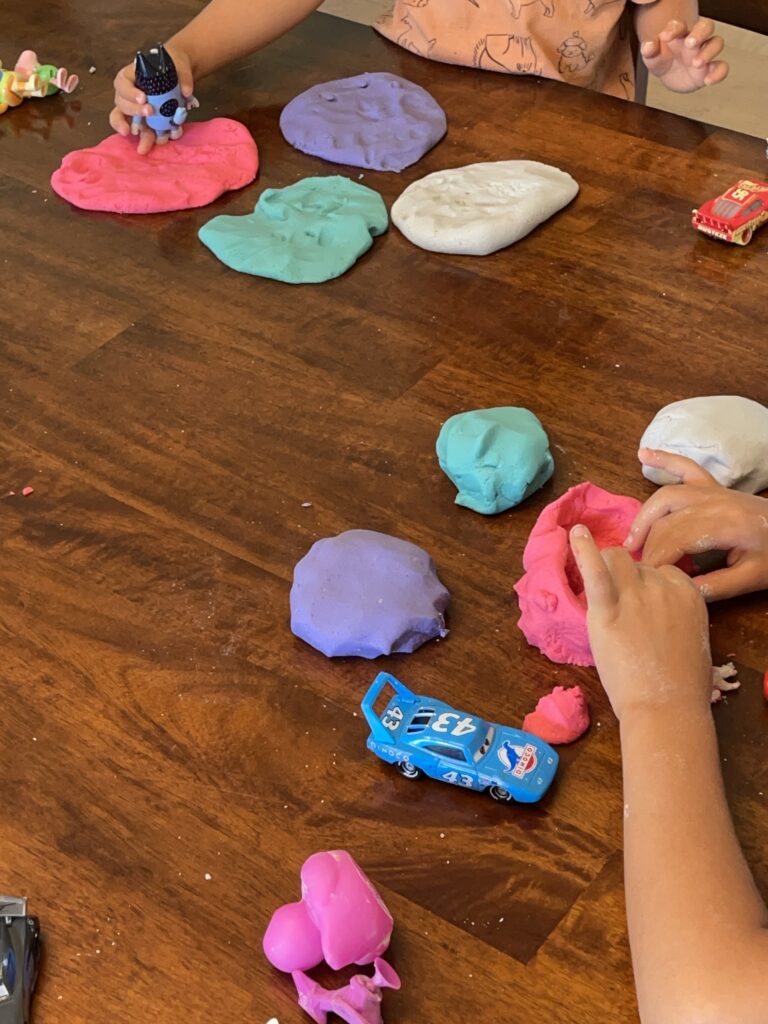
All year round, little hands in our house keep busy with tasks that help their minds grow. But in summer, when the Texas heat can cook anything on the sidewalk to nearly well done, we turn inward to the kitchen island — and about once a week, we make play dough.
The children do the making. They gather the ingredients from the pantry and carry them to the island; they fetch their own bowls. I let them fill the measuring cups themselves — flour and salt, the two big scoops of the recipe — and I make myself watch instead of help. My youngest struggles with it. He takes longer than his big sister, tries three grips before finding one that works, and does not quit. I like to think this small task is quietly teaching him perseverance. His sister, tidy by nature, winces at every spill. When flour hits the floor, I say only: let’s get that cleaned up.
I’ll be honest — staying quiet is the hardest part of the recipe. I come from generations where spilled flour wasn’t cute; it was lost food. That voice — don’t waste, don’t spill, be careful — was earned by people I love, in kitchens where mistakes cost something real, and it still lives in me. I catch myself reaching for the rag before they’ve noticed the spill. But then I hear the giggles, and I see that particular light children carry in their eyes when they are trusted with real work — and the voice quiets. Letting them spill flour is a small luxury three generations in the making, and I intend to spend it.
As for why homemade: motherhood tends to transform everything, including how you see life. When I was pregnant, something in me woke up. I started reading the ingredients on everything — creams first (that research is actually how my little skincare company, Lesuif, was born), then everything else my children’s skin would touch. Small hands absorb what they hold. So what I can make from scratch, I make — flour, salt, oil, and an afternoon: nothing in this dough I can’t pronounce, and nothing I’d mind finding in a toddler’s mouth, which, let’s be honest, is where some of it goes.
But if I’m reflective about it, the ingredients are only half the reason. The other half is quieter. A child who watches things being made learns something a store can’t teach her: that the world comes from hands. Play dough comes from the pantry. Dinner comes from the pot. Comfort comes from a person. When everything arrives finished, in a package, children learn that things simply appear — and I don’t want mine to believe that. I want them to know that nearly everything worth having was made by somebody, slowly, and that they are allowed to be that somebody.
My grandmother made everything from scratch because there was no other way. I make some things from scratch because I’ve come to believe her way was carrying something the convenient way quietly sets down. She made from necessity; I make from choice; and somehow both kitchens teach the same lesson — that making is a form of loving, done slowly enough for the children to see. Living naturally is, in essence, honoring the generations before me.
The dough lasts a couple of weeks in a sealed container. The habit, I hope, lasts a good deal longer.



Leave a Reply